
Dropping Elephant APT Escalates Attacks on Defense Sector with MSBuild-Delivered Backdoor
In the ever evolving world of cybersecurity, advanced persistent threat (APT) groups continue to develop increasingly sophisticated tactics to breach highly sensitive sectors.
A New Wave of Cyber Threats
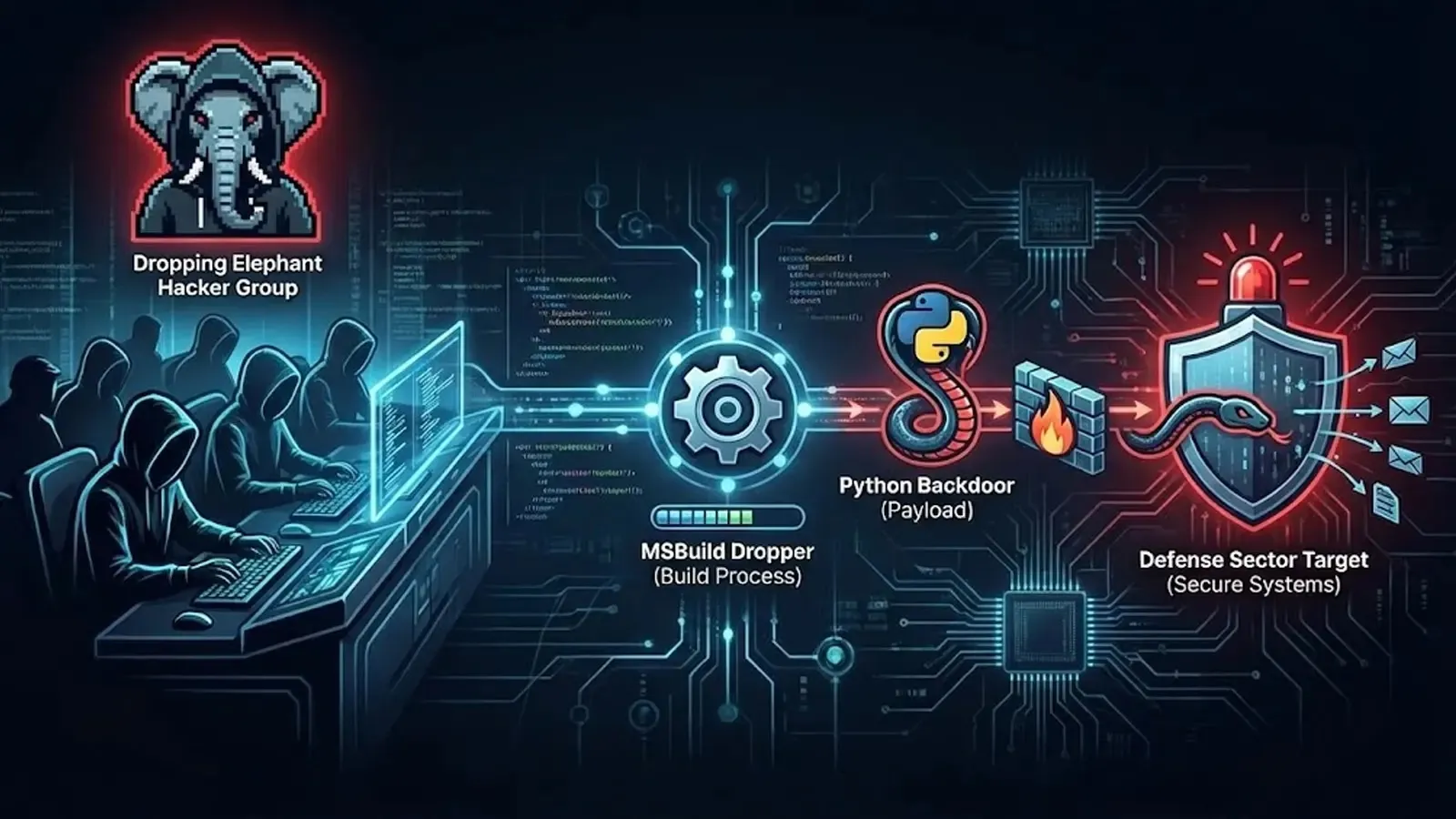
In the ever evolving world of cybersecurity, advanced persistent threat (APT) groups continue to develop increasingly sophisticated tactics to breach highly sensitive sectors. One such group, known as Dropping Elephant, has recently ramped up its attacks against the defense sector using a new, highly effective malware delivery method: the MSBuild delivered Python backdoor. This new technique marks a significant shift in the group’s strategy, utilizing legitimate Windows tools to bypass traditional defenses and maintain long term access to compromised networks.
In this blog post, we’ll break down how the Dropping Elephant APT is launching attacks using MSBuild, explain the threat of the Python backdoor, and offer strategies to protect your organization from similar attacks.
Understanding Dropping Elephant: Who Are They?
Dropping Elephant is an APT group believed to be based in India, with a focus on espionage and surveillance operations against government entities, military organizations, and critical infrastructure worldwide. The group is known for its highly targeted attacks and has been implicated in numerous campaigns aimed at stealing sensitive information from defense and governmental sectors.
The group’s previous tactics often involved spear phishing campaigns with malicious attachments. However, their recent shift towards MSBuild based payload delivery is a clear sign of evolving techniques. By leveraging MSBuild, a legitimate build tool in Microsoft’s development ecosystem, they are able to bypass traditional detection systems, evade antivirus software, and deliver powerful Python backdoors.
How the MSBuild Python Attack Works
The new attack method deployed by Dropping Elephant relies on a multistage delivery process that begins with MSBuild (a legitimate Microsoft tool used for compiling and building .NET applications). Here’s how the attack unfolds:
1. Spear phishing Email: The attacker sends a spear phishing email containing a malicious document that exploits vulnerabilities in MSOffice or PDF readers. The document may appear legitimate perhaps disguised as an official report or a critical document designed to entice the victim to open it.
2. MSBuild Execution: Once the victim opens the malicious document, it triggers MSBuild, which then executes a script. This script downloads and runs a Python backdoor from an external server controlled by the attackers.
3. Python Backdoor Deployment: The Python backdoor gives attackers full remote control of the compromised machine. The backdoor can exfiltrate sensitive data, steal credentials, or allow lateral movement across networks to reach more critical systems. Additionally, the backdoor can remain hidden by manipulating common system processes, making detection more difficult.
4. Persistence: The backdoor establishes persistence by modifying system configurations or injecting itself into critical processes, ensuring that it survives system reboots and remains undetected.
5. Lateral Movement: Once the attackers gain access to one machine, they use it as a stepping stone to move across the network, targeting more critical systems within the organization, particularly in the defense sector where sensitive information is stored.
The Risks to the Defense Sector
The defense sector is particularly vulnerable to Dropping Elephant’s tactics due to the highly sensitive nature of the data they hold, such as military intelligence, procurement plans, research, and development information. Any breach in this sector could have national security implications, as attackers could gain access to critical defense related information.
The MSBuild delivered Python backdoor used in these attacks allows the Dropping Elephant group to maintain control over compromised networks for extended periods, exfiltrate large amounts of data, and remain undetected by traditional security tools. This highlights the growing need for advanced threat detection that goes beyond simple signature based antivirus programs.
How to Defend Against MSBuild Delivered Python Backdoor Attacks
To defend against these advanced, multistage APT attacks, organizations need to take a layered security approach that includes the following key measures:
1. Behavior Based Detection
Traditional signature based security tools may not detect MSBuild delivered Python backdoors. Instead, behavior based detection should be employed to monitor for unusual file execution patterns, suspicious script activity, and abnormal network traffic associated with command and control (C2) communication.
2. Network Segmentation
Segmenting your network into isolated zones can limit the lateral movement of attackers. If one machine is compromised, attackers will have a much harder time spreading across the network and targeting critical systems.
3. Advanced Endpoint Protection
Invest in next generation endpoint protection that monitors file integrity, process injection, and unusual API calls that might signal the presence of a Python backdoor or other malicious tools.
4. User Training and Awareness
Phishing remains a primary method for delivering malware. Regular training on recognizing suspicious emails, attachments, and links can significantly reduce the risk of successful spear phishing attempts.
5. Continuous Monitoring and Incident Response
With APT groups like Dropping Elephant employing such stealthy tactics, real time monitoring and an effective incident response strategy are crucial. This includes monitoring for IOCs, conducting regular security audits, and having a prepared response plan for when an attack occurs.
Protecting Against Advanced Cyber Threats
The Dropping Elephant group’s use of MSBuild delivered Python backdoors is a wakeup call to all organizations, particularly those in the defense sector. The sophistication of their attack techniques demonstrates that even trusted tools like MSBuild can be weaponized to deliver devastating attacks.
At Alpha Cyber, we specialize in protecting organizations against these evolving threats. Our advanced threat detection solutions, incident response services, and security consulting ensure that your systems stay protected against the most advanced cyberattacks.
Don’t wait until it’s too late contact us today to learn how we can help you secure your network, detect hidden threats, and respond to incidents before they cause significant damage.
What We Offer:
- Advanced Threat Detection: Spot sophisticated attacks like Dropping Elephant before they cause harm.
- Incident Response & Forensics: Get fast, expert help to contain and recover from cyberattacks.
- Employee Security Training: Build a security first culture with training on phishing, malware, and more.
- Continuous Monitoring: Stay protected 24/7 with ongoing security monitoring.
Stay one step ahead of cybercriminals. Protect your data, protect your future.