Graphing Klingon RAT Infrastructure: Defend Against Evolving Threats
The threat landscape is constantly evolving, and as adversaries grow more sophisticated, defenders must stay one step ahead. One of the more persistent and damaging threats we’ve recently encountered is the Klingon RAT (Remote Access Trojan).
The threat landscape is constantly evolving, and as adversaries grow more sophisticated, defenders must stay one step ahead. One of the more persistent and damaging threats we’ve recently encountered is the Klingon RAT (Remote Access Trojan). This malware variant has been linked to extensive espionage and cyberattacks, and understanding its infrastructure is key to mitigating its impact.
Understanding Klingon RAT Infrastructure
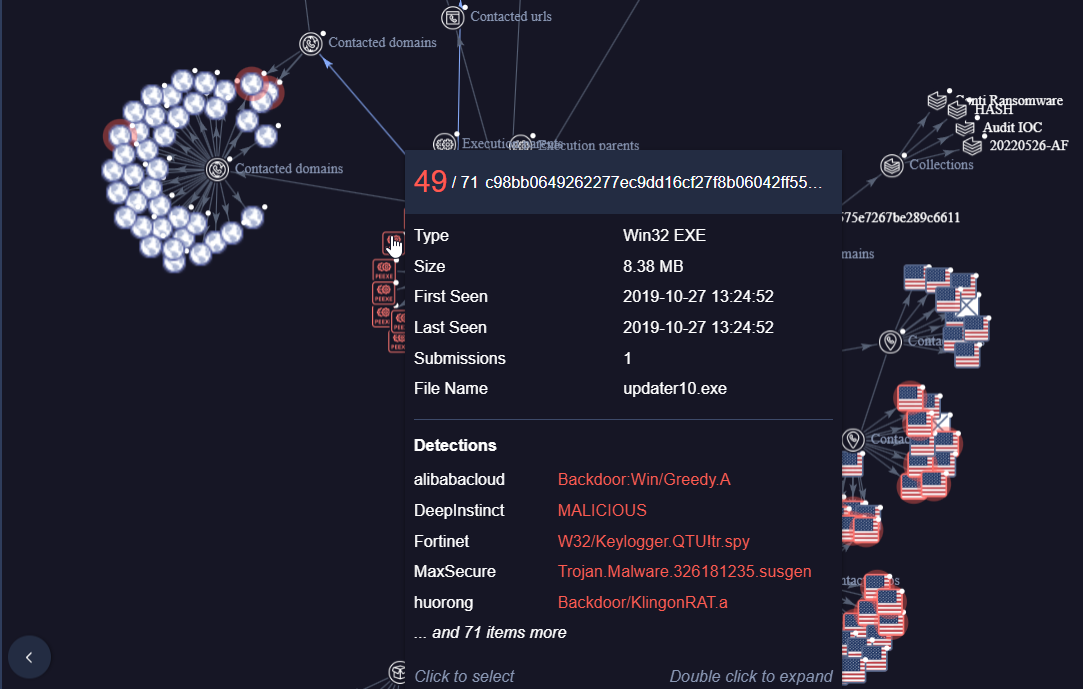
Klingon RAT operates through a complex web of compromised systems, which are used to infiltrate and persist on a target network. This infrastructure is often meticulously planned and can span multiple geographical locations, leveraging various techniques to evade detection. To combat this, a detailed map of the Klingon RAT infrastructure can significantly improve threat detection and response efforts.
At Alpha Cyber, we offer advanced Infrastructure Mapping services. This service involves analyzing the various elements of the RAT’s infrastructure, identifying critical points of compromise, and providing organizations with actionable intelligence. The infrastructure mapping includes identifying suspicious IPs, hostnames, and domains used by the RAT, as well as examining network traffic patterns for unusual behavior.
The primary goal is to help organizations detect these RATs early, block malicious IPs and domains, and prevent further compromise. A well-executed mapping can help cybersecurity teams identify the precise methods used by attackers, providing them with a roadmap for eliminating threats before they escalate.
Key Indicators of Compromise (IOCs)
In the case of Klingon RAT, several Indicators of Compromise (IOCs) have been identified that can be used for detection. These IOCs can be incorporated into your security tools to block malicious traffic and identify compromised systems. Below is a table of SHA256 hashes for files associated with the RAT that should be immediately blocked:
Klingon RAT IOC Table
| Category | SHA‑256 |
|---|---|
| Klingon RAT Sample 1 | 44237e2de44a533751c0baace09cf83293572ae7c51cb4575e7267be289c6611 |
| Klingon RAT Sample 2 | c66544e5f49feda32c75e9f796681499bda314866e6ae1e11398be9b4bc89349 |
| Klingon RAT Sample 3 | c9a2a966086a37276cc200c0f22f735d49df4e87f591fe806ca8d8597b9f60b7 |
| Klingon RAT Sample 4 | e8eea442e148c81f116de31b4fc3d0aa725c5dbbbd840b446a3fb9793d0b9f26 |
Using PEStudio and VirusTotal for Deeper Analysis
For a deeper dive into the Klingon RAT samples, we utilized powerful tools like PEStudio and VirusTotal, which helped identify some critical findings.
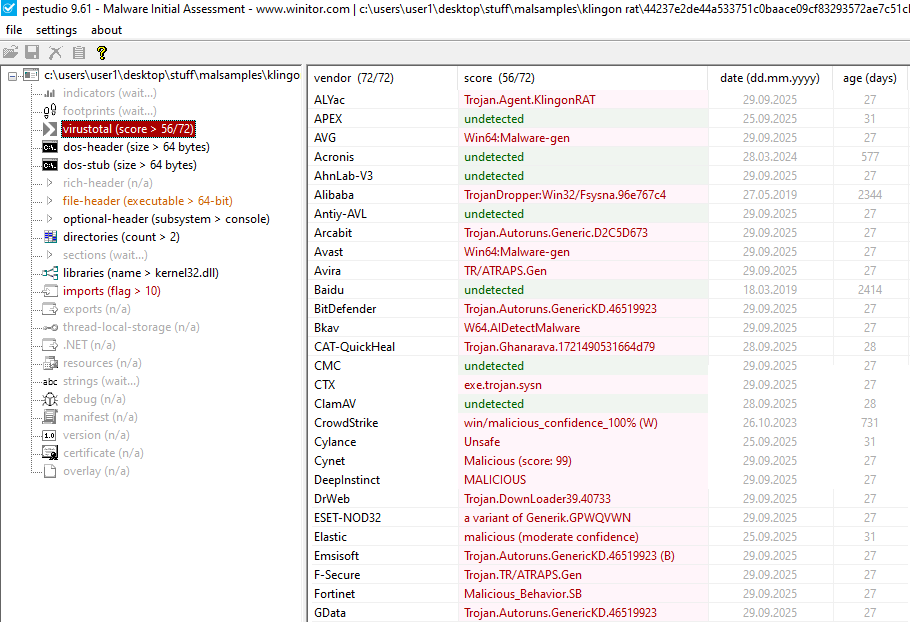
56 antivirus engines flagged these samples as malicious on VirusTotal, indicating that the RAT is highly detectable by most modern security software. This reinforces the need to monitor for known IOCs and leverage these results in endpoint detection.
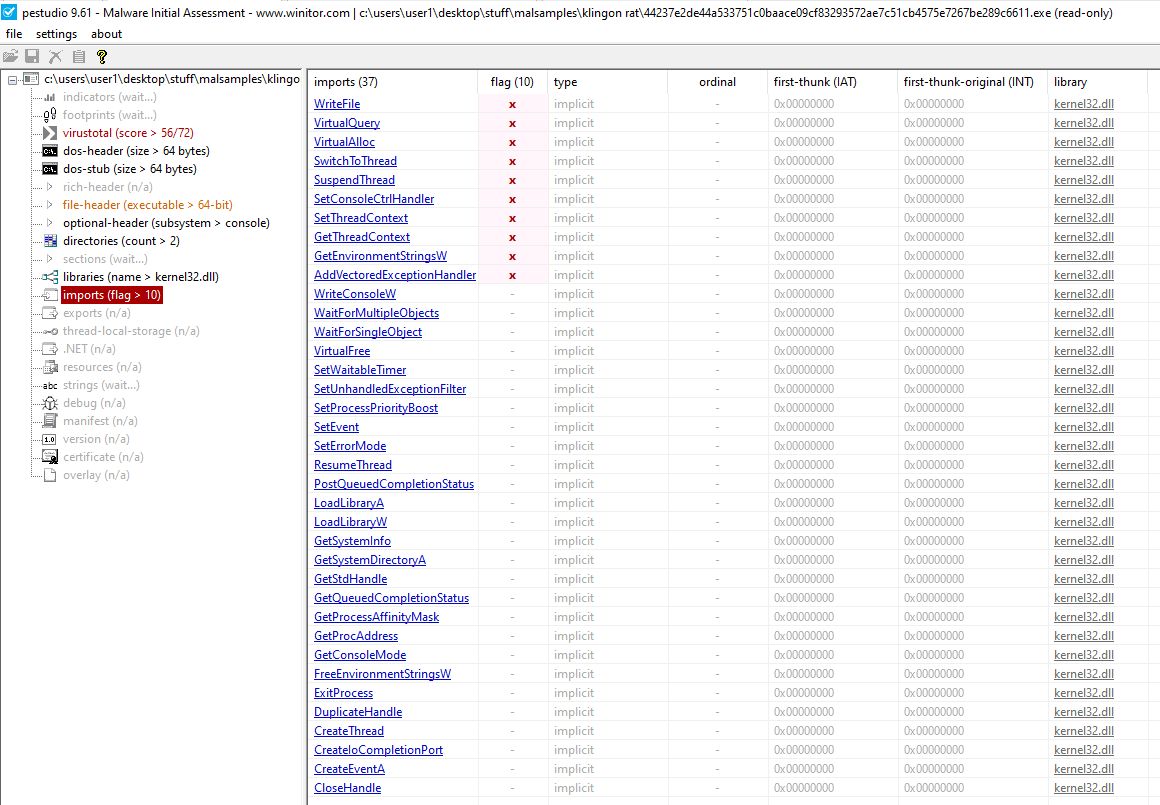
In PEStudio, it was found that the Klingon RAT contains 10 malicious imports, including:
WriteFile – commonly used for writing files, often associated with backdoor activities.SetThreadContext – used for manipulating thread execution, a technique often employed by malware to gain persistence.VirtualAlloc – used to allocate memory in a malicious process, helping to avoid detection by hiding payloads in memory.
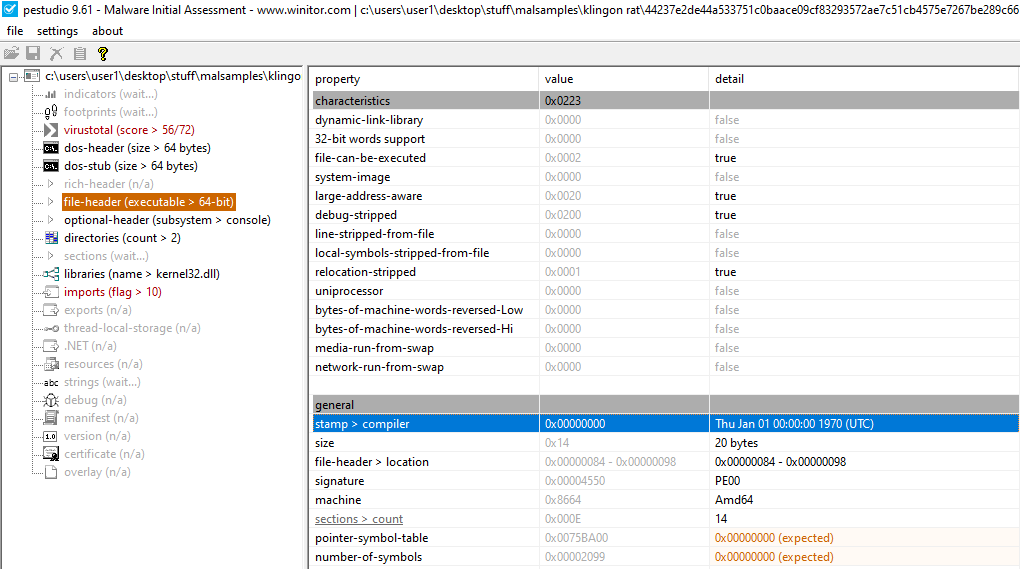
Timestamp Anomaly: A peculiar aspect of the Klingon RAT samples is that the compiled timestamp in VirusTotal shows Thu Jan 01 00:00:00 1970 (UTC), which is often used as a trick by malware authors to mask the true creation time of their malware. This timestamp could be indicative of deliberate obfuscation tactics used to avoid detection.
Take Action: Block and Monitor
Given the sophistication of Klingon RAT and its widespread detection, organizations must take proactive steps to block and monitor these threats. Start by blocking the IOCs listed in the table above, and implement continuous monitoring of network traffic, especially looking for unusual connections to the identified infrastructure points.
Additionally, integrating threat intelligence feeds that provide up-to-date IOCs and leveraging endpoint detection tools will help prevent the RAT from gaining a foothold in your environment.
Conclusion
Understanding and mapping the Klingon RAT infrastructure can provide organizations with the intelligence needed to respond effectively. At Alpha Cyber, our Infrastructure Mapping service helps businesses visualize attack paths, identify potential vulnerabilities, and fortify defenses against evolving cyber threats. With our expert analysis, you can ensure your environment remains resilient and secure.
If you’re interested in learning more or want to discuss how we can help you combat this and other threats, contact us today.