
Mysterious Elephant Moves Beyond Recycled Malware: Infrastructure Mapping of a Harassment-Driven Cyber Campaign
Mysterious Elephant, a persistent threat group long associated with espionage operations in South Asia, is showing signs of evolution, moving beyond reusing old malware.

Mysterious Elephant, a persistent threat group long associated with espionage operations in South Asia, is showing signs of evolution moving beyond reusing old malware and into customized infrastructure and targeted harassment campaigns. These latest attacks are more than cyber intrusions; they represent a deliberate campaign of digital aggression against individuals and institutions.
Our team has successfully mapped the infrastructure supporting this campaign, revealing how attackers manage malware distribution, command-and-control, and data exfiltration systems all designed to silently infiltrate and harass their targets.
What’s New in This Campaign?
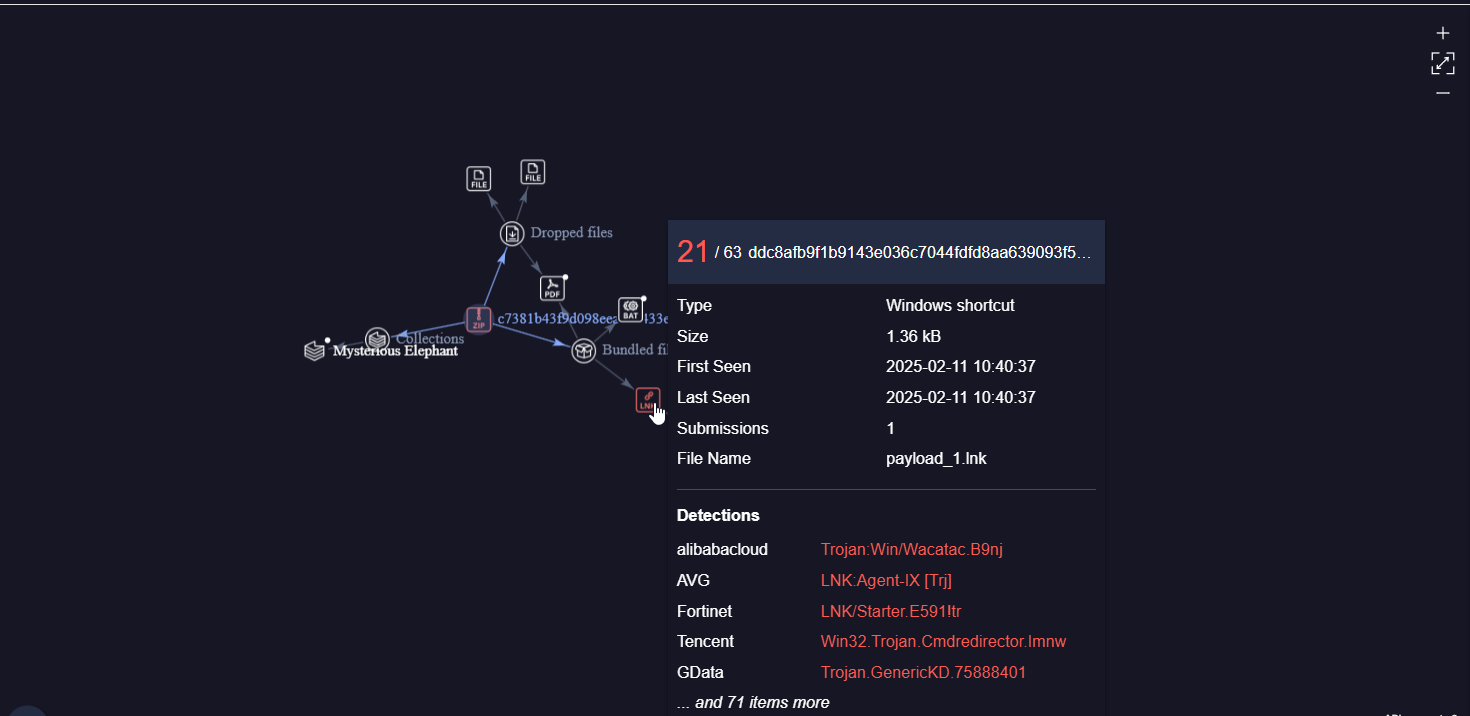
Unlike past incidents that relied on recycled or open-source malware, this recent wave includes:
Custom payload deployment, often delivered through spear-phishing and weaponized documents.
Exploitation of known vulnerabilities like CVE-2017-11882, still effective against outdated systems.
Wide malware distribution infrastructure built for stealth, redundancy, and longevity.
A disturbing focus on persistent access and psychological disruption, classifying this not only as espionage but as digital harassment.
These types of attacks go beyond data theft. They are targeted attempts to intimidate, disrupt, and destabilize victims at both organizational and individual levels.
Infrastructure Mapping Insights
Through detailed infrastructure analysis, we identified multiple malware distribution paths and command-and-control channels connected to these attacks. The attackers utilize:
Geographically distributed servers for resilience
Encrypted channels for data exfiltration
Dynamic IP rotations to evade detection
Variants of known malware repacked to evade signatures
Our analysis also confirms repeated re-use of infrastructure components across campaigns a clear sign of a centralized and organized operation.
Indicators of Compromise (IOCs) Block Immediately
Security teams should immediately integrate these IOCs into their detection and prevention systems.
| Type | Indicator |
|---|---|
| CVE | CVE-2017-11882 |
| FileHash-MD5 | 037b2f6233ccc82f0c75bf56c47742bb |
| FileHash-MD5 | 3caaf05b2e173663f359f27802f10139 |
| FileHash-MD5 | 4c32e12e73be9979ede3f8fce4f41a3a |
| FileHash-MD5 | 658eed7fcb6794634bbdd7f272fcf9c6 |
| FileHash-MD5 | 78b59ea529a7bddb3d63fcbe0fe7af94 |
| FileHash-MD5 | 7ee45b465dcc1ac281378c973ae4c6a0 |
| FileHash-MD5 | 85c7f209a8fa47285f08b09b3868c2a1 |
| FileHash-MD5 | 8650fff81d597e1a3406baf3bb87297f |
| FileHash-MD5 | 9e50adb6107067ff0bab73307f5499b6 |
These indicators are tied directly to active payloads and delivery systems mapped in the campaign.
Our Services: Proactive Defense Through Infrastructure Mapping
We offer advanced services to detect, map, and neutralize threats like Mysterious Elephant:
Full infrastructure mapping and visualization
IOC enrichment and tailored threat feeds
Threat actor tracking and attribution
Security hardening based on real-world TTPs
Incident response planning and playbooks
Don’t wait for disruption uncover and eliminate hidden threats before they strike.