Unmasking SideWinder: LNK Phishing Attack Mapping for Enhanced Protection
The APT-C-24 (also known as SideWinder) hacker group has been actively employing LNK file phishing techniques in their recent attacks, posing significant risks to organizations worldwide.

The APT-C-24 (also known as SideWinder) hacker group has been actively employing LNK file phishing techniques in their recent attacks, posing significant risks to organizations worldwide. By exploiting malicious LNK files to drop malware and steal sensitive information, this group continues to evolve its tactics, making it crucial for businesses to stay one step ahead.
In this post, we break down the recent LNK file phishing attacks from APT-C-24 and provide an infrastructure map of their activities. Additionally, we present a comprehensive IOC table to help you block malicious indicators and safeguard your network.
Mapping the APT-C-24 Infrastructure
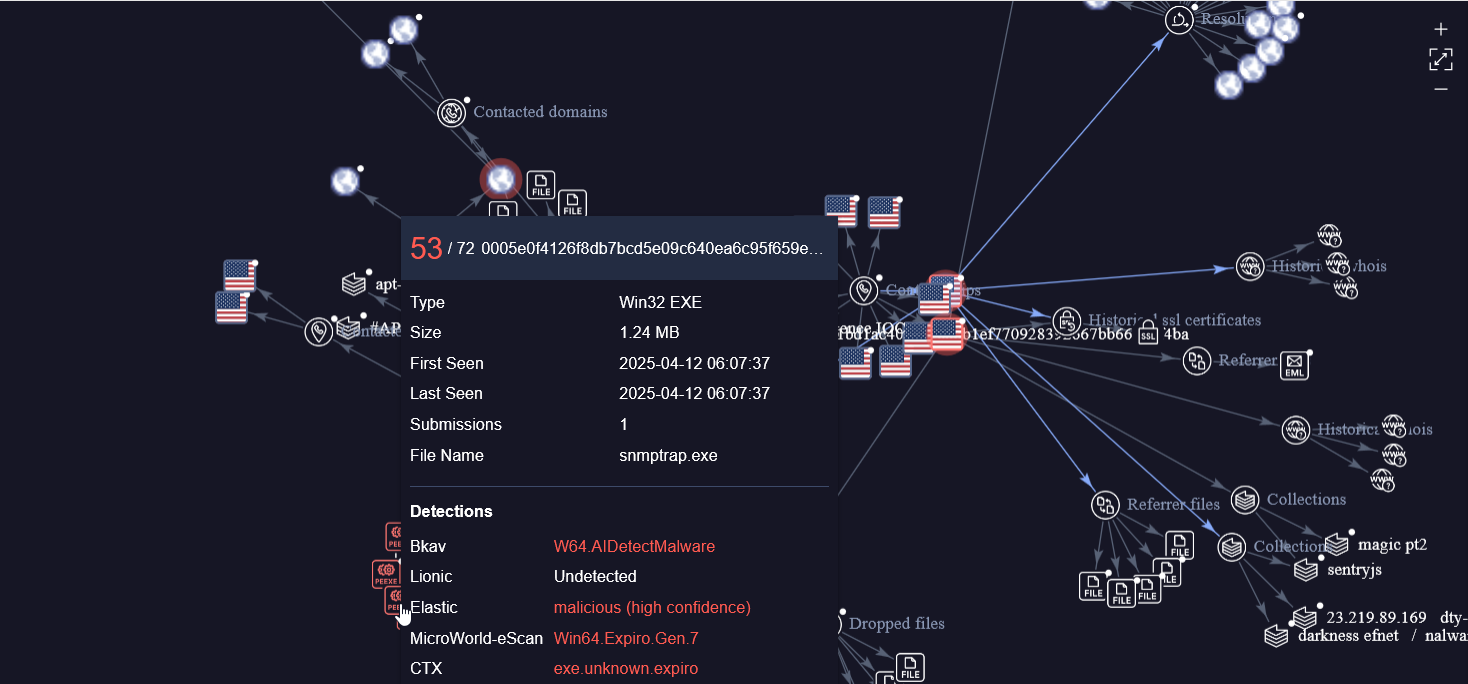
APT-C-24 is known for using a combination of social engineering and malicious file execution to gain initial access. One of their latest techniques involves the use of LNK files, Windows shortcut files that execute malicious scripts or commands when opened. These files often look innocuous but are crafted to exploit vulnerabilities and drop payloads like SLF:Win32/LnkFileWithMshta.A, a type of Windows shortcut that leverages MSHTA for remote code execution.
By mapping the infrastructure tied to these attacks, businesses can now proactively identify and block suspicious files and domains tied to these operations.
IOC Table: Critical Indicators to Block
To help you defend against these targeted phishing campaigns, we’ve compiled a list of Indicators of Compromise (IOCs) directly tied to the latest SideWinder LNK file phishing attacks. Blocking these IOCs is a crucial step in securing your network against this threat.
| Indicator Type | IOC | Description |
|---|---|---|
| FileHash-MD5 | 1912b2d5e88d8dc277c7890bb4a318e0 | Malicious LNK file used in phishing attack. |
| FileHash-MD5 | 193a676eb9f32a8106ac4282eca90385 | SLF:Win32/LnkFileWithMshta.A – Phishing vector. |
| FileHash-MD5 | 2e382c82d055e6e3a5feb9095d759735 | Suspicious LNK file found in targeted email. |
| FileHash-MD5 | 3a97695937d9501423f100d76af24cc1 | LNK file associated with recent APT-C-24 attacks. |
| FileHash-MD5 | 3c92342e979a1b69abb3b2031c2dfa26 | SLF:Win32/LnkFileWithMshta.A – Executes malicious code. |
| FileHash-MD5 | 5ce07c6ce99724105168272cc4e90a30 | LNK file used in spear-phishing campaigns. |
| FileHash-MD5 | 5dd45b3cdf793c9f2d74209f58e555d6 | Another malicious LNK file deployed in attack chain. |
| FileHash-MD5 | 65c7b3577358f1d3ce4a004d4f73f35d | Linked to APT-C-24 operations targeting govt orgs. |
| FileHash-MD5 | 6a36e86888e7f935f10fba64bd3bca0f | LNK file part of lateral movement mechanism. |
| FileHash-MD5 | 6ad920494159cc05939306eaf4e0e24a | Associated with payload dropper for APT-C-24. |
| FileHash-MD5 | 6b0d026c57528db28cb9673248041e4a | Used in initial exploitation of user systems. |
| FileHash-MD5 | 6ff8bdc2193284cb386aef100a7ab1ac | APT-C-24 backdoor LNK file. |
| FileHash-MD5 | 73a0170ea882989f6ffc3b4726a3ee56 | LNK file triggering payload execution. |
How to Protect Your Organization
To stay secure, it’s essential to:
1. Monitor for LNK files in inbound emails and external downloads.
2. Block known IOCs like the MD5 hashes listed above using your firewall, endpoint protection, or IDS/IPS systems.
3. Use sandboxing and email filtering solutions to screen for malicious payloads.
4. Conduct regular employee training on recognizing phishing emails and handling suspicious attachments.
5. Apply timely patches to close vulnerabilities exploited by malicious LNK files.
By adopting these proactive security measures, you can minimize the risk of a breach due to APT-C-24’s LNK phishing tactics.
Conclusion
APT-C-24’s recent LNK file phishing attacks demonstrate the sophistication and persistence of modern cyber threats. With their ability to craft seemingly benign files that lead to devastating attacks, businesses must be vigilant and prepared.
By leveraging IOC mapping and blocking critical indicators associated with this threat group, you can safeguard your organization against SideWinder’s evolving tactics. Stay protected, stay ahead.
Let us help you defend your business. For more information or assistance, feel free to contact us and learn how our advanced cybersecurity services can mitigate risks posed by APT-C-24 and similar threats.