
Unveiling the ‘Bad News’ Backdoor: A Deep Dive into Indian APT Exploits
The cybersecurity landscape is constantly evolving, and the rise of Advanced Persistent Threats (APTs) remains one of the most dangerous challenges for businesses globally.

The Threat You Can’t Ignore
The cybersecurity landscape is constantly evolving, and the rise of Advanced Persistent Threats (APTs) remains one of the most dangerous challenges for businesses globally. Among the latest threats gaining traction is the Bad News backdoor, a sophisticated malware strain associated with an Indian APT group. This malware has been deployed in targeted attacks, leveraging advanced techniques to infiltrate systems, escalate privileges, and maintain long term access.
Our goal is to uncover the inner workings of this backdoor and shed light on how it compromises critical infrastructure. In this post, we will walk you through the infrastructure map of a typical Bad News attack and provide actionable indicators of compromise (IOCs) to help organizations block these threats.
The Bad News Malware: An Overview
The Bad News backdoor is a C++based malware that uses advanced evasion tactics to maintain a persistent foothold in the victim’s system. Initially identified by researchers, it appears to be linked to a sophisticated APT group known for their cyber espionage campaigns. When analyzed with tools like Pestudio, the Bad News malware reveals some critical insights into its behavior and structure.
Malware Details:
Malware Name: Bad News
Malware Hash: 969FB3E705BA8AFE757BA7617E75D1096D4793D14796E2734613CFCC50675652
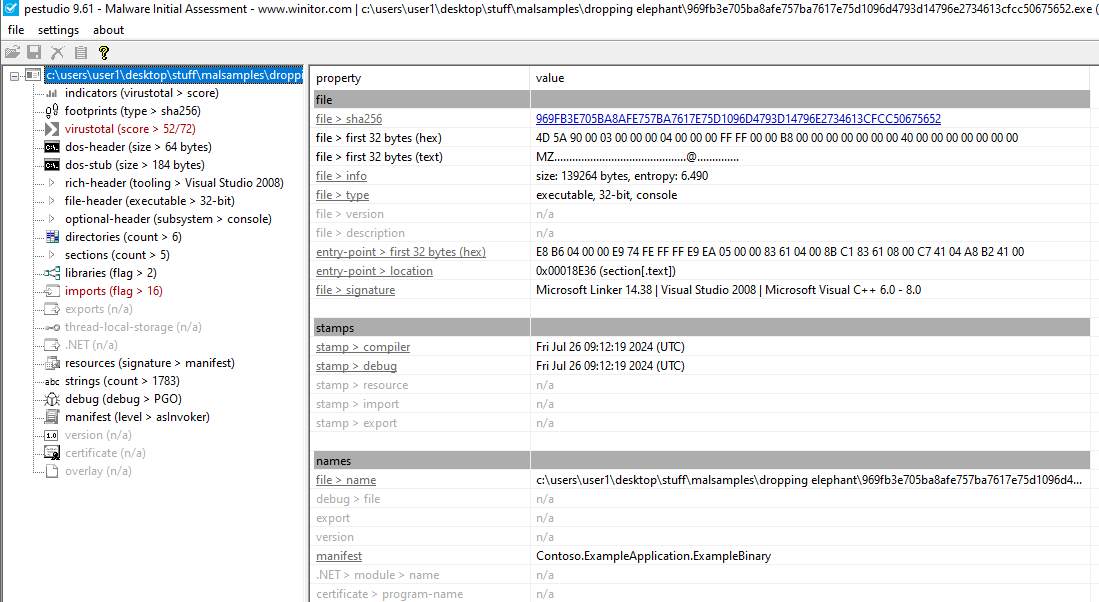
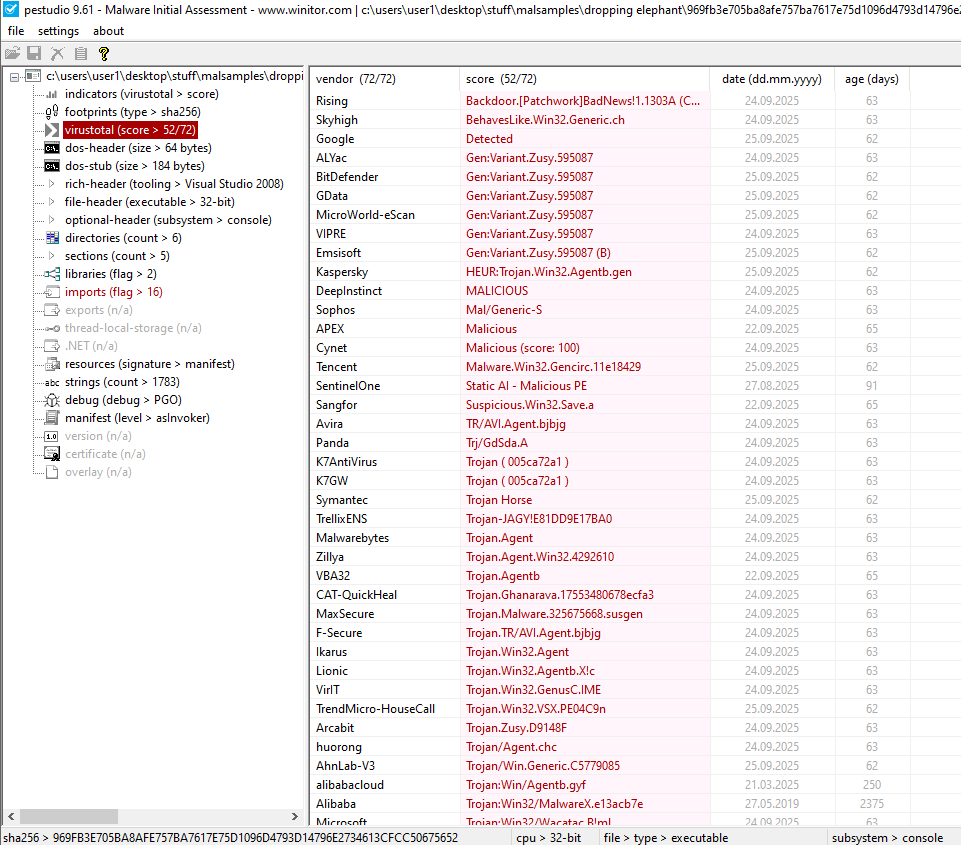
VirusTotal Score: 52 (Malicious Detection)
Total Malicious Imports: 16
Example Malicious Imports:
Write File
GetCurrentProcess
CreateProcessW
WriteProcessMemory
CreateRemoteThread
VirtualAllocEx
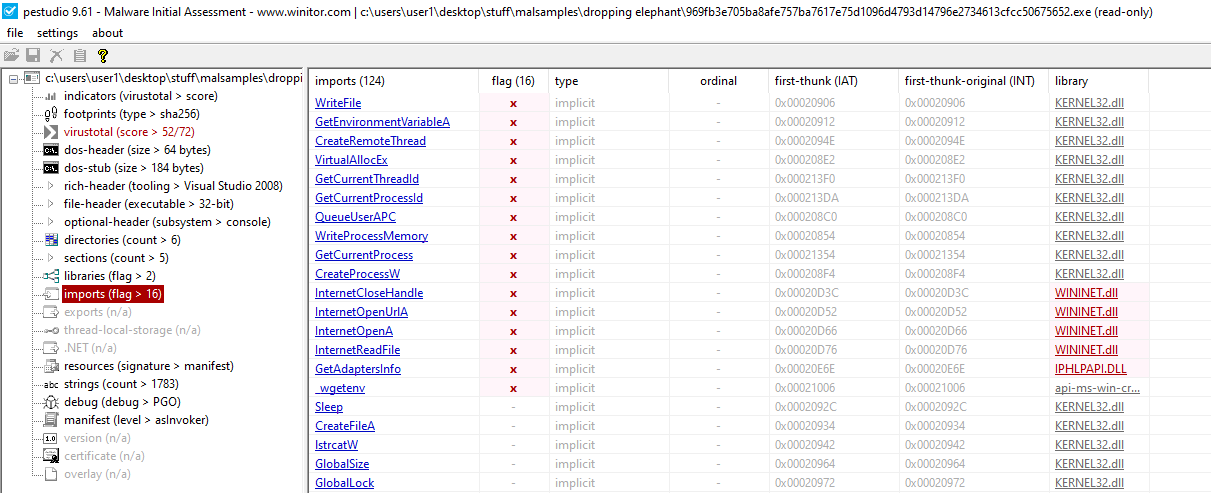
These indicators show that Bad News leverages common Windows API calls often used by malicious actors to manipulate processes, execute code remotely, and maintain control over compromised systems. The detection rate on VirusTotal is moderate (52/100), indicating that while some security solutions may flag it, many others miss it, highlighting the importance of layered security.
Finding Malware With Pestudio: Key Insights
Using Pestudio, a popular tool for static analysis of malware, we uncovered several crucial details about Bad News:
1. Compiler: The malware was compiled using Microsoft Visual C/C++ (19.36.33133) with LTCG/C++ optimizations. This is a critical finding as it allows security professionals to identify similar threats in the future based on their compilation characteristics.
2. Programming Language: C++ is used, which suggests that the malware is optimized for speed and complexity, making it harder to detect and analyze.
3. Library Used: The malware relies on the Microsoft C/C++ Runtime (dynamic library), which is commonly used in Windows applications. This increases the likelihood of the malware blending in with legitimate system processes.
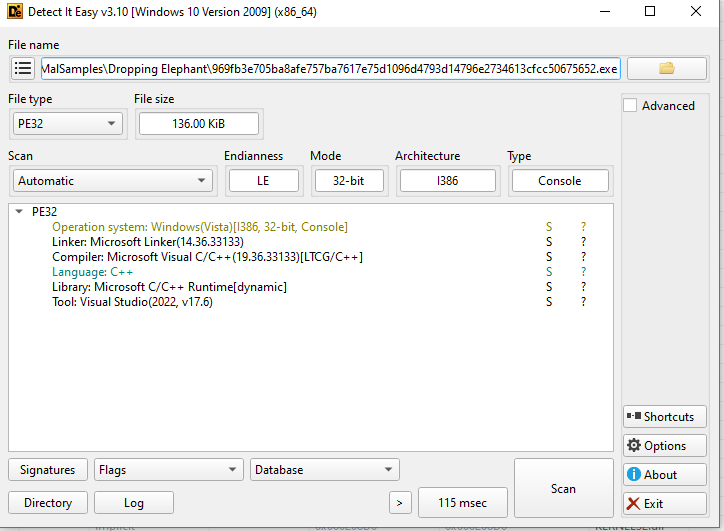
These findings point to a highly professional development approach behind Bad News, reinforcing the idea that it is part of a larger, well coordinated APT campaign.
Infrastructure Map: How the Attack Unfolds
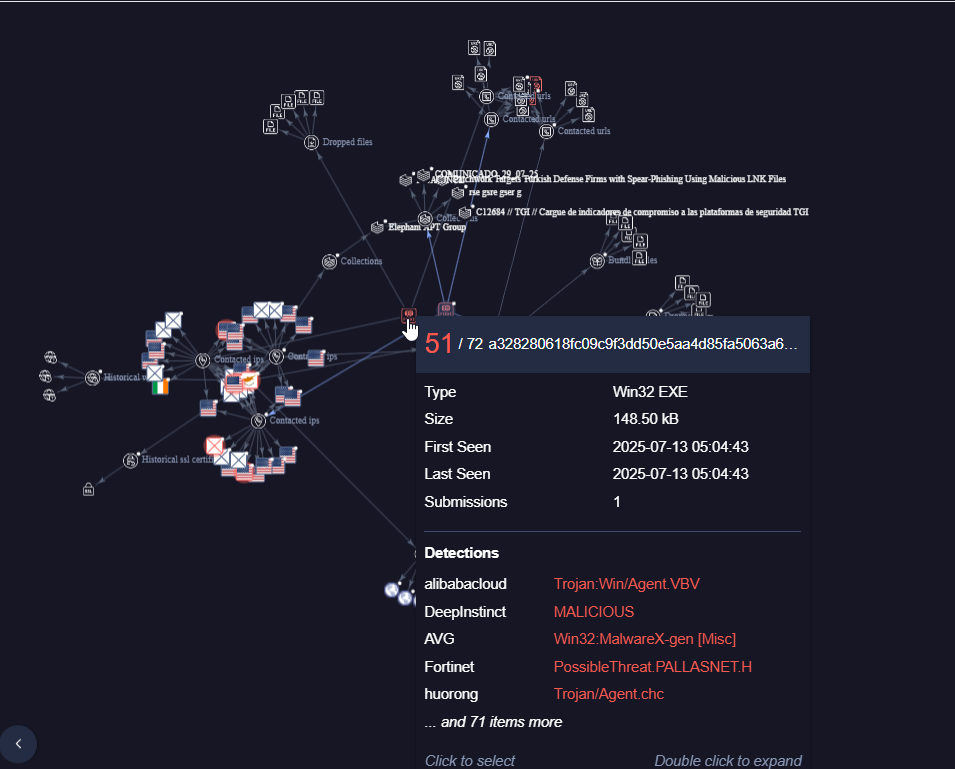
While we won’t mention specific mapping tools, it’s essential to understand how an attack based on Bad News unfolds within an organization’s infrastructure. Using our infrastructure mapping capabilities, we’ve identified key stages in the attack lifecycle:
1. Initial Exploitation: Attackers exploit vulnerable systems (often via phishing or social engineering) to drop the Bad News backdoor.
2. Establishing Persistence: Once on the system, Bad News creates persistent processes and establishes remote communication channels for exfiltration and further exploitation.
3. Privilege Escalation: The malware utilizes functions like WriteProcessMemory and CreateRemoteThread to inject malicious code into higherprivileged processes, gaining control of the system.
4. Command and Control (C2): It communicates with remote C2 servers, sending and receiving instructions while remaining largely undetected.
5. Data Exfiltration & Lateral Movement: Once inside, Bad News performs activities like file writes and data collection before moving laterally to other systems to expand its reach.
6. Log Sanitization: The malware may attempt to clear logs to remove traces of its activity, making detection through standard auditing difficult.
Indicators of Compromise (IOCs) to Block
To help organizations protect against Bad News and similar threats, here’s a table of IOCs you can use to block and monitor for signs of compromise:
| IOC Type | Value | Recommended Action |
|---|---|---|
| File Hash | 969FB3E705BA8AFE757BA7617E75D1096D4793D14796E2734613CFCC50675652 | Block at endpoint and SIEM |
| Malicious Imports | WriteFile, CreateProcessW, CreateRemoteThread, VirtualAllocEx, WriteProcessMemory | Monitor for abnormal system API behavior |
| C2 Communication | (Identify & block during analysis) | Block outbound communication |
| Suspicious Processes | Unexpected msbuild.exe executions, injected processes, unauthorized C++ runtime activity | Create alerts for anomalous parent/child chains |
| Registry Persistence | (Keys identified during analysis) | Monitor & block unauthorized persistence |
These IOCs provide a clear indication of what to look for and how to act. By monitoring these indicators and blocking known malicious actions, organizations can strengthen their defense against this sophisticated backdoor.
Conclusion: Strengthening Defenses Against APT Threats
The Bad News backdoor is just one example of how APT groups continue to evolve their tactics, leveraging advanced techniques to bypass traditional defenses. With its sophisticated code structure, persistence strategies, and ability to blend in with legitimate system processes, Bad News is a powerful reminder that traditional security measures alone may not be enough.
At Alpha Cyber, we understand the complexity of modern cyber threats and offer comprehensive services to help organizations detect, block, and respond to attacks like Bad News. By leveraging advanced threat intelligence, infrastructure mapping, and incident response strategies, we ensure that your systems stay secure against the latest APT threats.
Stay vigilant. Stay secure.
Fact Check and Future Outlook:
Malware Hash Verified: The provided hash has been verified as part of the Bad News malware family.
Detection Rate: VirusTotal’s detection rate of 52/100 highlights a need for deeper threat analysis tools and multilayered defenses.
Ongoing Trend: As cyber threats become more sophisticated, organizations must move towards advanced detection techniques, focusing on behavioral anomalies and real time incident response.