Violet Typhoon’s Warlock Ransomware Campaign: Mapping SharePoint Vulnerability Exploits
How Enterprise Collaboration Tools Became a Gateway for Advanced Ransomware Campaigns The cyber threat landscape has shifted from opportunistic attacks to highly coordinated, multi-stage operations orchestrated by some of the most advanced adversaries in the world.
Mapping Violet Typhoon’s Warlock Ransomware: SharePoint as the New Frontline
How Enterprise Collaboration Tools Became a Gateway for Advanced Ransomware Campaigns
The cyber threat landscape has shifted from opportunistic attacks to highly coordinated, multi-stage operations orchestrated by some of the most advanced adversaries in the world. A recent campaign attributed to Violet Typhoon (APT41) is a prime example a sophisticated, state-linked actor using known SharePoint vulnerabilities to deploy a weaponized ransomware payload called Warlock.
This campaign is not only technically advanced it’s strategically designed. The operation combines espionage-grade intrusion tactics with financially motivated ransomware extortion, showing just how blurred the lines between cybercrime and statecraft have become.
When Espionage Meets Ransom: APT41’s “When Alice Met Bob” Moment
In cybersecurity, the phrase “When Alice met Bob” is often used to explain trusted communication between two parties. But today, that trust is being weaponized.
In the case of Violet Typhoon, what we’re witnessing is a new paradigm “When Espionage Met Ransom.”
APT41, historically aligned with cyberespionage campaigns targeting geopolitical intelligence, is now fusing its stealthy infiltration methods with criminal ransomware deployment, effectively merging two worlds:
The persistence, discipline, and surgical targeting of state-sponsored actors
The disruptive, monetized aggression of financially motivated cybercriminals
This hybrid approach is more than a threat it’s a blueprint for the future of cyberwarfare. And it’s being executed with precision across global enterprises using everyday tools like Microsoft SharePoint as the entry point.
Exploiting the Familiar: SharePoint as an Attack Surface
Microsoft SharePoint is a staple in corporate environments. But its widespread use, complex configurations, and frequent exposure to the internet make it a high-value target.
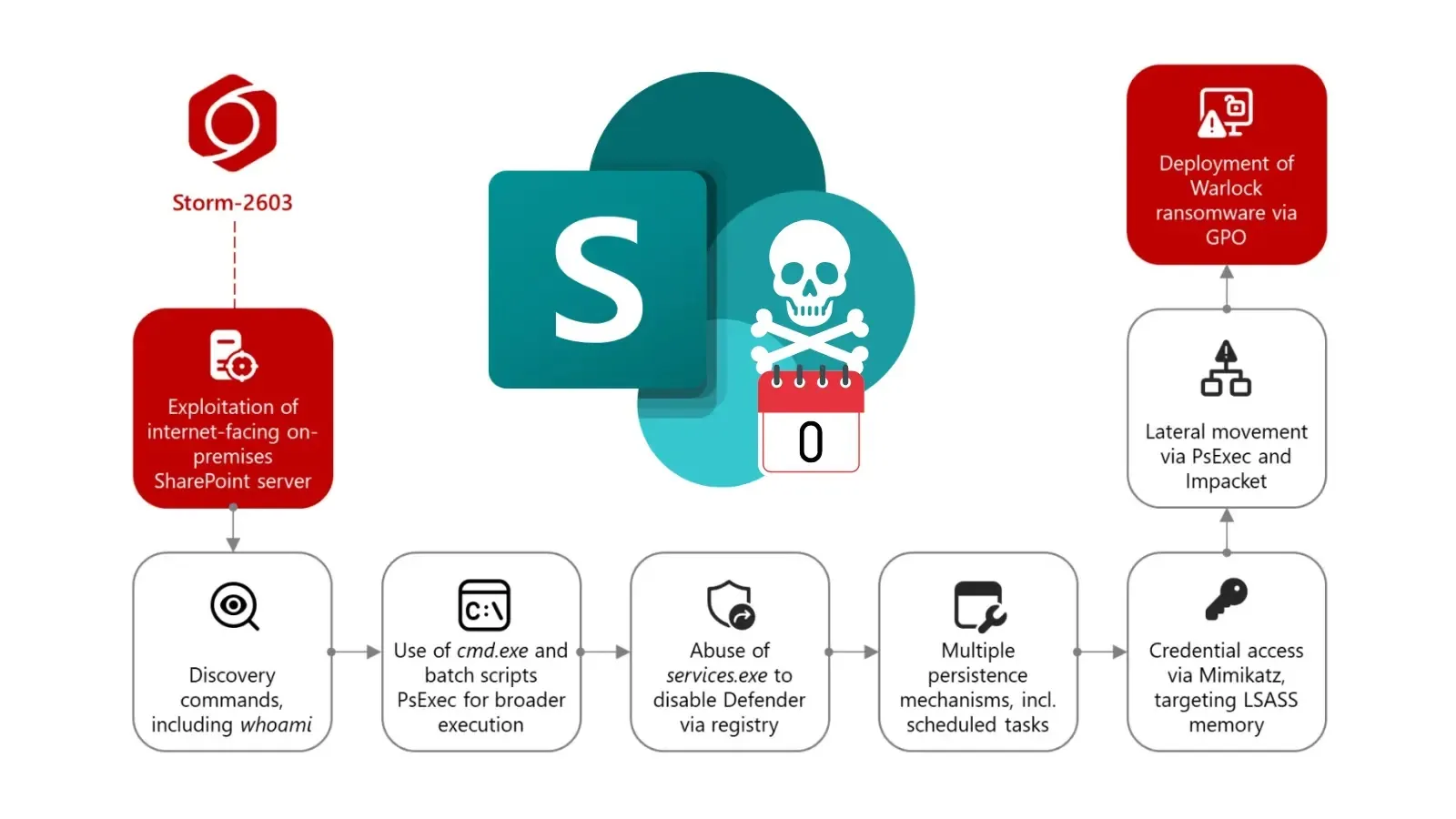
Violet Typhoon leverages vulnerabilities like CVE-2019-0604, which allows remote code execution on unpatched servers. Once access is gained, the attackers:
1.Deploy stealthy web shells and custom backdoors
2.Establish command-and-control (C2) channels using obfuscated DNS queries
3.Move laterally using PowerShell based scripts
4.Drop the Warlock ransomware payload
5.Exfiltrate sensitive data for additional leverage
This isn’t smash-and-grab ransomware. It’s methodical, staged compromise, executed after weeks of silent surveillance and data mapping inside the target network.
Infrastructure Mapping: The Hidden Blueprint Behind the Breach
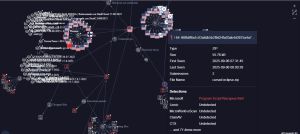
While malware signatures and payloads change, one element remains consistent: infrastructure.
Every attack has to call home. Every ransomware operator must:
1.Stage files on domains or cloud buckets
2.Communicate with infected machines via IPs or DNS tunnels
3.Issue encryption keys or collect stolen data
By mapping these infrastructure components, defenders can gain visibility into attack campaigns before they reach endpoints. This includes:
1.Discovering spoofed domains that mimic business apps
2.Detecting anomalous outbound traffic patterns
3.Identifying shared infrastructure across multiple campaigns
In the case of Warlock ransomware, our team uncovered an extensive web of malicious domains, IPs, and communication pathways built to appear legitimate, all supporting a seamless infection and extortion cycle.
This reinforces a key truth: attackers rely on infrastructure and we can stop them by tracking it.
From Persistence to Encryption: Inside the Warlock Payload
Unlike traditional ransomware that simply locks files, Warlock is part of a larger operation. After initial access is achieved through SharePoint:
1. Persistence is established through registry keys, scheduled tasks, and DLL sideloading.
2. Credential harvesting and data exfiltration tools are deployed, often disguised as system updates.
3. Lateral movement is performed via SMB spreaders and WMI-based commands.
4. Final-stage encryption is executed using a custom-built encryptor, which avoids common AV signatures.
5. Victims are presented with a ransom note demanding crypto payments with threats of data leaks if payment is refused.
The sophistication of this payload suggests not just technical skill, but an intimate understanding of enterprise IT environments.
What’s at Stake: Industries in the Crosshairs
The Warlock campaign doesn’t target random individuals. It’s focused on organizations with valuable, operationally critical data, including:
1.Financial institutions
2.Legal firms
3.Healthcare providers
4.Engineering and manufacturing
5.Government contractors
These sectors are appealing not only because they’re high-value but because downtime can have real-world consequences, pressuring victims to pay quickly.
With ransomware evolving into a tool of geopolitical influence, no industry is off-limits.
What You Can Do: Rethink Defense from the Infrastructure Up
If your organization relies on tools like Microsoft SharePoint, it’s time to move beyond endpoint protection. The new threat model demands visibility into the infrastructure attackers depend on.
At Alpha Cyber, we help organizations stay ahead of threats like Violet Typhoon through:
1.Infrastructure Mapping and Threat Correlation
2.Proactive Monitoring of Malicious Domains and C2 Activity
3.Custom Threat Intelligence Reports
4.Incident Response and Digital Forensics
5.Ransomware Containment and Recovery Services
We don’t just detect malware we expose the entire kill chain, from the first phishing domain to the last ransom demand.
Ready to See What’s Targeting You?
Many organizations are already being scanned, profiled, or partially compromised often without knowing it. Infrastructure-based attacks like Warlock begin long before encryption ever happens.
We’ll show you if your environment is communicating with attacker infrastructure and help you close the gaps before it’s too late.
In a world where espionage meets ransom, awareness is no longer optional it’s essential.
See the infrastructure. Map the campaign. Stop the breach.