DCSync Attack With Mimikatz
In the complex landscape of Active Directory security, understanding the tactics adversaries employ is paramount.
Unmasking the DCSync Attack: A Stealthy Path to Domain Domination
In the complex landscape of Active Directory security, understanding the tactics adversaries employ is paramount. One particularly potent and stealthy technique that threat actors leverage is the DCSync attack, often facilitated by tools like Mimikatz. This attack allows an adversary to extract sensitive credentials, including password hashes, directly from a domain controller, posing a severe threat to the integrity and confidentiality of your entire network.
At Alpha Cyber, we specialize in identifying and mitigating advanced threats that bypass conventional defenses. This article delves into the mechanics of the DCSync attack, explains its critical implications, and underscores the necessity of robust cybersecurity solutions to protect your organization.
What is a DCSync Attack?
A DCSync attack exploits the Microsoft Directory Replication Service Remote Protocol (MS-DRSR). This legitimate protocol is used by domain controllers to synchronize Active Directory data with one another. In a DCSync attack, an attacker’s machine impersonates a legitimate domain controller, requesting replication of directory data from another domain controller. Crucially, this includes the replication of user credentials, such as NTLM hashes.
The significant danger of DCSync lies in its operational stealth:
No Code Execution on DC: Unlike other methods that require direct code execution or administrative privileges on the target domain controller itself to extract password data, a DCSync attack can be executed remotely. This significantly reduces the attacker’s footprint and increases their chances of remaining undetected.
Leveraging Legitimate Functionality: Because it uses a built-in, essential Active Directory replication protocol, traditional endpoint security solutions often struggle to differentiate between legitimate replication traffic and a malicious DCSync request.
Who is Vulnerable to a DCSync Attack?
Any organization relying on Active Directory for identity and access management is potentially vulnerable if certain security configurations are not adequately enforced. The primary targets and prerequisites for a successful DCSync attack often involve:
Compromised Credentials with Specific Permissions: An attacker needs credentials that possess the necessary replication permissions within Active Directory. These typically include:
Domain Admins (by default, have these rights)
Enterprise Admins (by default, have these rights)
“Replicating Directory Changes” and “Replicating Directory Changes All” permissions (often granted to service accounts or delegated administrators).
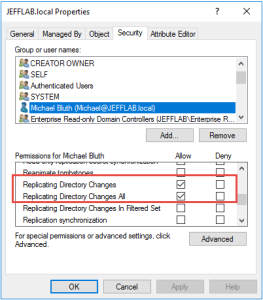
Any user account within the “Domain Controllers” security group.
Lack of Privilege Monitoring: Inadequate monitoring of highly privileged accounts and the specific permissions granted to service accounts can leave a gaping hole for attackers to exploit.
Insufficient Network Segmentation: Flat networks can allow attackers to easily move from a compromised workstation to a domain controller, making it easier to launch the DCSync attack.
The Attack in Action (Simplified Overview for Awareness)
While we won’t provide a step-by-step guide for malicious purposes, understanding the high-level process helps illustrate the threat:
Gaining Initial Foothold: The attacker first needs to compromise a user account or system within the domain, ideally one with the necessary replication privileges.
Launching Mimikatz (or similar tool): From the compromised machine (which does not need to be a domain controller), the attacker executes Mimikatz.
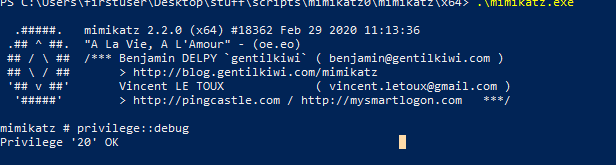
Escalating Privileges (if necessary): If the initial compromised account doesn’t have the necessary rights, the attacker might use other techniques to escalate privileges on the compromised host to an account with replication permissions.
Executing the DCSync Command: The attacker then uses the lsadump::dcsync command within Mimikatz, specifying the target domain and the user account whose credentials they wish to extract. For example:
lsadump::dcsync /domain:yourdomain.local /user:administrator
This command instructs Mimikatz to impersonate a domain controller and request the target domain controller to replicate the administrator user’s credentials.
Credential Extraction: The domain controller, believing it’s communicating with another legitimate domain controller, sends the requested credential hash back to the attacker’s machine.
Protecting Your Organization from DCSync and Similar Attacks
Defending against sophisticated attacks like DCSync requires a multi-layered approach beyond traditional perimeter defenses. At Alpha Cyber , our cybersecurity services are designed to address these advanced threats proactively:
Active Directory Security Audits: Regular, in-depth audits of your Active Directory configuration to identify over-privileged accounts, misconfigurations, and weak delegation.
Advanced Endpoint Detection and Response (EDR) / Extended Detection and Response (XDR): Deploying and effectively managing EDR/XDR solutions that can detect anomalous process behavior, unusual network replication requests, and suspicious use of legitimate tools like Mimikatz or even the underlying replication protocol activity.
Network Segmentation: Implementing proper network segmentation to limit lateral movement and restrict domain controller access to only necessary systems.
Strong Password Policies and MFA: While not directly preventing DCSync, these foundational controls reduce the initial attack surface and make it harder for attackers to gain the initial foothold.
Don’t let a single compromised credential lead to full domain compromise. The DCSync attack is a stark reminder that even legitimate Active Directory functionalities can be weaponized. Partner with Alpha Cyber to strengthen your Active Directory security, identify vulnerabilities, and deploy the advanced defenses needed to protect your most critical assets.
Is your Active Directory truly secure?
Contact Alpha Cyber today to schedule a comprehensive Active Directory security assessment and bolster your defenses against sophisticated attacks like DCSync.