
Uncovering the Unseen: Rootkit Infrastructure Mapping and What It Means for Your Business
Cyber threats are evolving, and many organizations don’t realize just how far attackers will go to stay hidden.

How Rootkits Hijack Trusted Processes to Evade Detection
Cyber threats are evolving, and many organizations don’t realize just how far attackers will go to stay hidden.
Our cybersecurity team recently investigated a sophisticated rootkit-based campaign that exemplifies how modern attackers exploit trusted Windows processes to remain invisible. In this case, the attackers abused svchost.exe, a legitimate system process, to gain deep access and avoid triggering any red flags in traditional security software.
But what made this campaign truly dangerous wasn’t just the malware. It was the infrastructure behind it.
What Made This Rootkit Different
This particular rootkit went far beyond basic system compromise. Key features included:
Browser Hijacking via DNS Manipulation:
The rootkit altered DNS settings on infected endpoints, allowing the attacker to redirect legitimate web traffic to malicious or fraudulent websites without user awareness. This effectively enabled large-scale traffic redirection and ad fraud at the system level.
Persistence Through Process Masquerading:
By embedding itself within svchost.exe, the malware gained elevated privileges and persisted across reboots. This technique also made detection by antivirus software far more difficult, as the malicious behavior blended in with normal system operations.
Encrypted Configuration and Dynamic Updates:
The rootkit fetched encrypted configuration files and payloads from external servers, allowing the attacker to update or modify behavior remotely without redeploying the malware.
Hardcoded C2 and Redundant Infrastructure:
The rootkit used multiple embedded IP addresses and domains as command-and-control (C2) points. Many of these were linked to dynamic DNS services, making takedown efforts more difficult.
Modular Architecture:
Payloads could be added or updated dynamically, giving the attacker flexibility to perform additional actions like credential theft, click fraud, or further data exfiltration depending on the target.
Rootkits Are Evolving, So Must Your Defenses
Unlike typical malware, rootkits operate at the kernel level, burrowing deep into the operating system. The most dangerous ones abuse legitimate processes like svchost.exe, a common Windows service host, to mask their presence. Once embedded, they can:
- Bypass antivirus and endpoint protections
- Hook into system calls to monitor user activity
- Silently redirect network traffic
- Exfiltrate sensitive data without triggering alerts
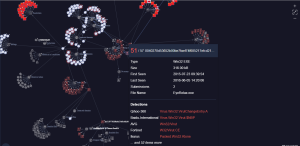
Our forensic investigation revealed the existence of a highly structured network of malicious IPs, encrypted payloads, and command and control servers. The rootkit was designed with redundancy and resiliency, making removal nearly impossible without specialized tooling.
How Infrastructure Mapping Helped Us Stop the Threat
By investigating and mapping the infrastructure, we were able to uncover:
- A tiered command and control (C2) network across multiple regions
- DNS manipulation strategies to redirect web traffic
- Custom encryption routines to hide communications
- Modular payloads dynamically injected into memory at runtime
This kind of intelligence is essential not just for neutralizing active threats, but for understanding how these campaigns evolve, and how to stay ahead of them.
What This Means for Your Organization
If your security solutions rely solely on signature based detection or traditional firewalls, you’re vulnerable. The threats we face today are designed to blend in, not break in. This makes proactive monitoring, behavioral analysis, and infrastructure intelligence critical components of any cybersecurity strategy.
What We Offer
At Alpha Cyber, we specialize in uncovering and dismantling these invisible threats. Our services include:
- Threat Hunting and Detection Services
- Infrastructure Mapping and C2 Takedown
- Advanced Endpoint and Network Monitoring
- Custom Threat Intelligence Reports
Whether you suspect malicious activity or want to stay ahead of the next attack, our team is equipped to protect your digital environment, from kernel to cloud.
Final Thoughts
Modern attackers no longer kick down the door. They slip in unnoticed. Don’t wait for a breach to learn that your defenses were blind to rootlevel threats.
Let us help you shine a light on what others can’t see.
Schedule a consultation today and discover what’s hiding beneath the surface of your network.