Why Your Vacuum is a Privacy Nightmare
We’ve all seen the videos: a robot vacuum mindlessly bumping into a chair leg or getting bullied by the family cat. It looks harmless, even a bit stupid.
Your Vacuum Isn’t Just Cleaning It’s Mapping Your Downfall
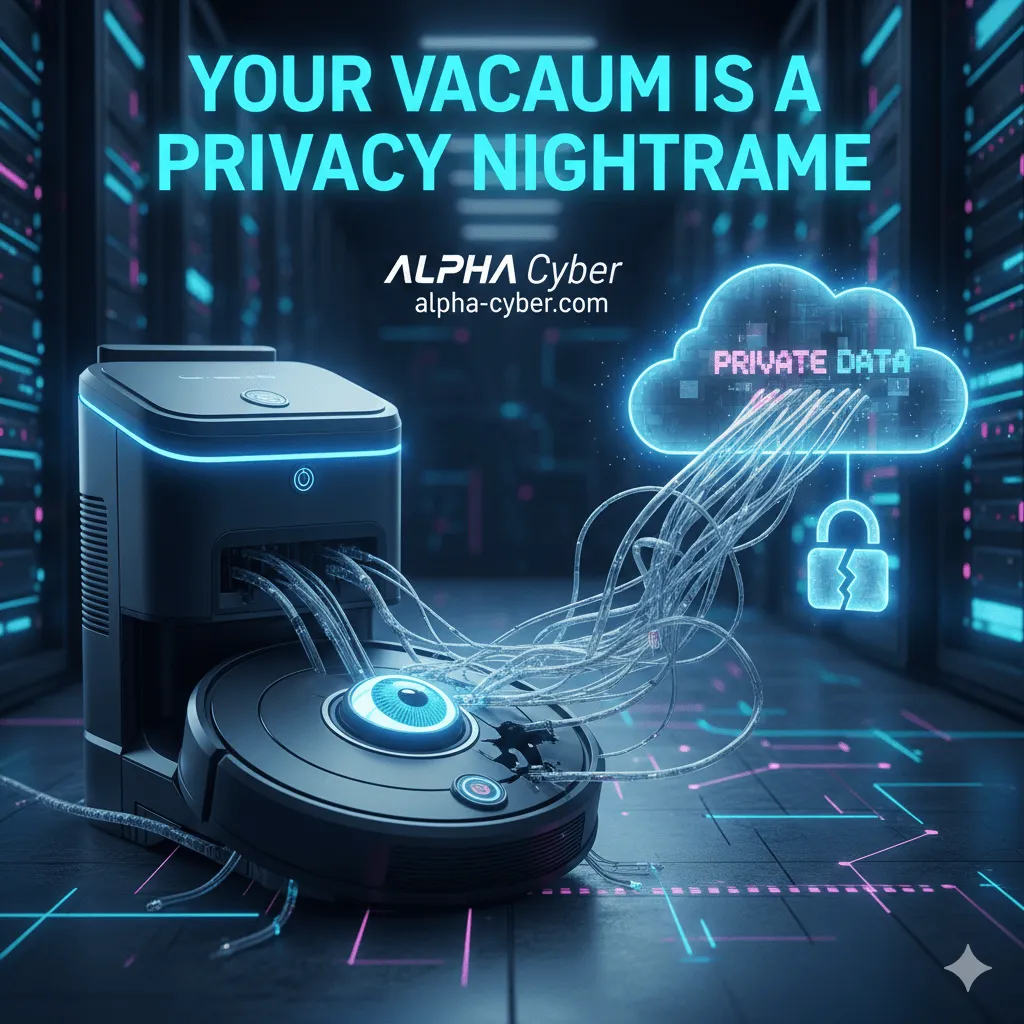
We’ve all seen the videos: a robot vacuum mindlessly bumping into a chair leg or getting bullied by the family cat. It looks harmless, even a bit stupid. But behind that spinning brush is a suite of LIDAR sensors, high-res cameras, and microphones that are quietly becoming a goldmine for data brokers.
At Alpha Cyber, we spend our days looking for vulnerabilities in corporate networks. But lately, we’ve noticed the biggest “backdoors” aren’t in your firewall they’re parked in a charging dock in your living room.
The “Clean” Reality of Data Harvesting
Modern smart vacuums don’t just “see” dust; they build detailed 3D maps of your home. They know the exact square footage of your house, the layout of your bedrooms, and, thanks to AI object recognition they can identify the brand of your TV or the fact that you have a new baby crib in the nursery.
Here’s why that matters to your security:
The Unencrypted Cloud: Most of this spatial data is sent to offshore servers. If their security is lax, a hacker doesn’t need to break into your house; they just need to download the floor plan from the cloud.
Microphone Creep: Many newer models have voice control. If that connection isn’t audited, you effectively have an unmonitored “hot mic” moving from room to room.
The Metadata Market: Data about your floor plan and lifestyle habits is worth a fortune to advertisers. You paid for a vacuum, but you’re still the product.
Why This Is a Corporate Problem
If you’re a business owner or an executive working from home, your “privacy nightmare” vacuum is now a corporate liability. A device that maps a home office or records audio in a room where sensitive Zoom calls happen is a high-risk endpoint.
Most people “set it and forget it,” leaving these devices on their primary Wi-Fi network alongside their work laptops and NAS drives. That is a recipe for a lateral movement attack that we see far too often.
How to Take Your Privacy Back
You don’t have to go back to a manual broom, but you do need to be smarter than your appliances.
VLAN Segmentation: Never put “Smart” IoT devices on the same network as your sensitive data.
No-Go Zones: Use the app to block the vacuum from entering sensitive areas like home offices or bedrooms.
Regular Audits: When was the last time you checked what permissions your vacuum’s app has on your phone? (Hint: It probably doesn’t need access to your contacts).
The Bottom Line: If it’s connected to the internet, it’s a door. And if that door isn’t locked, someone else is eventually going to walk through it.
Is your “Smart Home” a security hole?
We specialize in hardening home offices and small business networks against the “hidden” threats of the IoT era. Don’t wait for a data breach to find out your appliances were talking behind your back.
Book a Security Audit Today